By Logan F. Martin, PhD, CIH, CSP, CHMM, is the founder and principal of LF Martin LLC, a firm providing safety consulting, OSHA compliance support, expert witness testimony, and industrial hygiene services. Follow Dr. Martin at https://www.linkedin.com/in/drmartinsafety
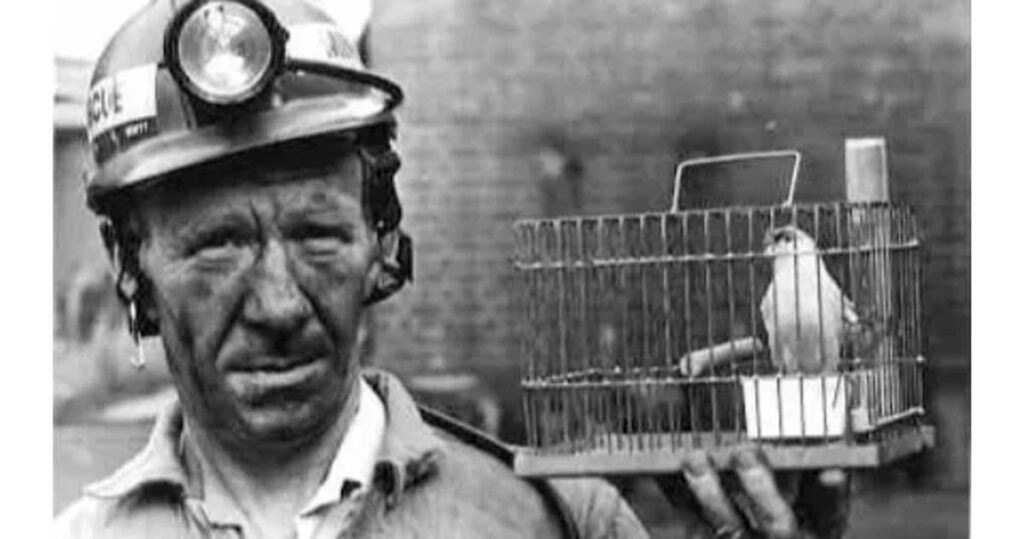
For generations, miners carried canaries underground because the birds reacted to bad air before people did. The canary has since been replaced by a monitor that clips to a collar, but the problem it solved is unchanged: many of the atmospheres that kill people give no warning at all.
Oxygen-deficient air looks and smells like any other air. Carbon monoxide is odorless. Hydrogen sulfide smells like rotten eggs at low concentrations, then deadens the sense of smell at higher ones.
Gas testing and atmospheric monitoring are how we replace assumption with measurement. Here is where they belong, what doing them properly involves, and what can quietly undermine them.
Also Read: Why Four-Gas Monitoring Isn’t Enough: Part 2
The common thread is limited air exchange combined with something that can consume oxygen, displace it, burn, or poison. That combination shows up in more places than the obvious tank entry.
It shows up in manufacturing.
- Confined space entry for tanks, vessels, reactors, silos, pits, sumps, and ductwork.
- Hot work on or near equipment that has held flammables, or anywhere vapors may be present.
- Line breaking and opening process equipment.
- Inerting and purging with nitrogen or other gases, where oxygen is deliberately displaced.
- Processes that use or generate hazardous gases: solvent cleaning and coating, ammonia refrigeration, wastewater treatment, fermentation, and dry ice or CO₂ systems.
- Fuel-powered equipment indoors, such as propane forklifts, and welding with shielding gases in enclosed or low-lying areas.
It shows up on construction sites.
- Manholes, sewers, vaults, tanks, and crawl spaces.
- Excavations and trenches where a hazardous atmosphere could reasonably be expected like near landfills, fuel storage, sewer lines, or contaminated soil. OSHA requires testing in those cases once an excavation is deeper than 4 feet.
- Tunnels and shafts.
- Enclosed or partly enclosed areas with engines running generators, concrete saws, power trowels, and temporary heaters.
- Coatings, epoxies, adhesives, and sealants applied where ventilation is limited.
- Hot work during renovation and demolition, and any work around existing gas utilities.
The standard four-gas monitor reads oxygen, combustible gases (as a percentage of the lower explosive limit), carbon monoxide, and hydrogen sulfide. Test in that order: oxygen first, then combustibles, then toxics. The order matters because most combustible gas sensors need adequate oxygen to give a true reading.
Also Read: 4 Best Practices for Confined Space Monitoring
Under OSHA’s confined space rules, acceptable conditions are oxygen between 19.5% and 23.5%, flammables below 10% of the LEL, and toxics below their exposure limits. Many site programs set tighter action levels, particularly for hot work, and your program is the one that governs.
A four-gas monitor answers four questions. Make sure they are the right four for the job. If the hazard is ammonia, chlorine, or solvent vapor, you need a sensor or a photoionization detector that can see it.
Good monitoring starts well before anyone switches on a meter. The job hazard analysis and permit should settle six things.
- The hazards. What has the space held? What is connected to it or next to it? What will the work itself introduce?
- The instrument. Sensors matched to those hazards, plus a pump and tubing if you need to sample remotely.
- Preparation of the space. Isolation and lockout, draining, cleaning, purging, and ventilation, all completed and verified.
- Acceptable conditions. Action levels written on the permit, along with what happens when one is reached.
- Who tests, where, and how often. Periodic or continuous, and what triggers a retest: breaks, a change in scope, a change in conditions, or any interruption to ventilation.
- The rescue plan. In place before entry. NIOSH has reported that would-be rescuers have accounted for more than half of confined space fatalities, which is what happens when the plan is improvised.
A job hazard analysis also requires proper testing.
- Verify the instrument. Bump test before each day’s use. Do a full calibration on the manufacturer’s schedule and after a failed bump test, a hard drop, or exposure to a high concentration. Zero it in known clean air, and check the battery, pump, filters, and tubing.
- Test from outside first, before anyone breaks the plane of the opening.
- Test at several levels. Gases stratify. Methane rises; hydrogen sulfide and most solvent vapors sink. Sample the top, middle, and bottom, then keep sampling in the direction of travel.
- Give the sample time. Air drawn through tubing takes time to reach the sensor, and the sensor takes time to respond. Follow the manufacturer’s guidance for your hose length.
- Record the readings on the permit, and give entrants the chance to watch the test being done.
- Keep monitoring. The pre-entry test describes one moment. Continuous monitoring in the breathing zone covers the rest of the shift.
- When the alarm sounds, leave. Nobody stays to investigate, and nobody silences it and carries on.
Entrants, attendants, entry supervisors, fire watches, and the person designated to do the testing all need training matched to their role. At a minimum, that covers the hazards and the symptoms of exposure; how to operate, bump test, and read the specific instrument on site; what the readings mean and what the instrument cannot detect; sampling technique; alarm response and evacuation; and emergency procedures, including why unplanned rescue attempts are so often fatal.
Also Read: How we Train: The Basics
The training should be hands-on with the actual meter, competency should be demonstrated instead of assumed, and it should be refreshed when equipment or procedures change or when performance shows a gap. Supervisors need the same grounding, because theirs is the signature on the permit.
This is the part that catches experienced crews. An acceptable reading is true for the conditions that existed when it was taken, and conditions move.
Welding and cutting consume oxygen and generate fumes and carbon monoxide. Coatings and solvents release vapor. Disturbing sludge or scale can release trapped hydrogen sulfide. Even rusting steel and decomposing organic material use up oxygen in a closed space.
A generator or idling truck near the blower intake pushes carbon monoxide straight into the space. A nearby nitrogen purge, a line being drained, or a process upset in the next unit can all migrate. This is why simultaneous operations belong in the pre-task conversation.
Air short-circuits between the supply and the opening and leaves dead zones behind. If the blower stops, conditions can revert within minutes. Check where the makeup air is coming from, and retest whenever ventilation is interrupted.
Heat drives more vapor off liquids and residues. Falling barometric pressure can draw soil gas and landfill gas into excavations and vaults. Cold slows sensor response and drains batteries. A wind shift can carry exhaust or vapor toward the work.
Sensors have limits. Here are a few.
- Catalytic combustible sensors need oxygen. They can read low in oxygen-deficient or very rich atmospheres, and they can be poisoned by silicones and other contaminants.
- Combustible sensors are calibrated to one gas, commonly methane or pentane. Other vapors read differently unless a correction factor is applied.
- Carbon monoxide sensors are cross-sensitive to hydrogen and some other gases, so a battery charging area can produce a reading that is not what it appears to be.
- Below 10% LEL does not mean safe to breathe. For toluene, 10% of the LEL is about 1,100 ppm, more than five times OSHA’s 200 ppm limit and above the level NIOSH considers immediately dangerous to life or health.
- A small oxygen drop is a big deal. Going from 20.9% to 20.0% means roughly 4% of the air, more than 40,000 ppm, is now something else. Find out what before calling the reading acceptable.
Familiarity (“we’ve been in this tank a hundred times”), schedule pressure, and alarm fatigue all erode good practice. So does a monitor worn in a pocket or under a jacket instead of in the breathing zone, a pre-entry test treated as the finish line, and any decision that trusts a nose over a sensor.
Verify instead of assuming. Was the bump test done? Do conditions in the field match the permit? Has the scope changed, or has anything changed nearby? Was all of it carried across the shift handover?
Give the crew the time that proper testing takes, and back the worker who stops the job on an alarm. The fastest way to teach a crew to ignore the monitor is to second-guess the person who listened to it.
The canary’s job was to notice what people couldn’t. The monitor does that far better, but only when it is the right instrument, verified, in trained hands, and used inside a plan that expects conditions to change. The number on the screen describes one moment. Working safely depends on what we do with it, and on remembering that the air can change after the test is done.