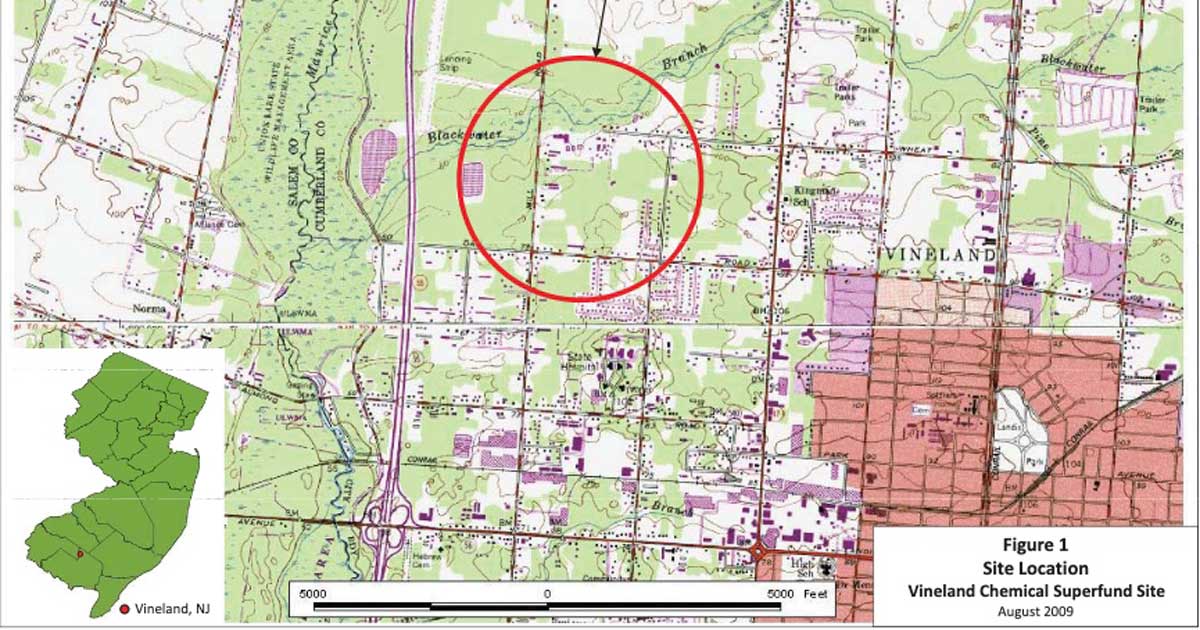
The U.S. Environmental Protection Agency is proposing an interim cleanup plan to address arsenic contamination remaining beneath the surface at the Vineland Chemical Superfund site in Vineland, New Jersey.
The proposed plan focuses on arsenic-contaminated saturated soil, which is soil below the groundwater table, that continues to act as a source of contamination to groundwater, sediment, and nearby floodplain areas.
“To protect human health and the environment, EPA is taking an important step to keep arsenic from spreading,” said EPA Regional Administrator Michael Martucci. “EPA’s proposed plan targets a remaining source of arsenic contamination at the Vineland Chemical site and builds on years of cleanup work already completed.”
Also Read: EPA Oversees Uranium Cleanup in Ariz.
Under EPA’s proposed interim cleanup plan, the agency would treat the contaminated areas underground to keep arsenic from moving from soil into groundwater. In one part of the site, EPA would pump air into the ground to help stabilize the contamination. In another area, EPA would inject an iron-based material that helps stabilize arsenic in place to prevent it from moving to groundwater.
The plan also includes installing a horizontal hydraulic barrier underground in a third area to help stop arsenic from building up in nearby floodplain soil and sediment over time. This cleanup plan is an interim plan, not a final plan. This means that EPA will further evaluate after this work is done to see if further cleanup is needed.
The proposed interim plan and supporting documents will be available on the Vineland Chemical Superfund site profile page.
The Vineland Chemical Company operated from 1949 to 1994 and produced arsenic-based herbicides and fungicides. The company stored byproduct arsenic salts in open piles, lagoons, and chicken coops, which led to contamination of soil, groundwater, sediment, and floodplain areas.
Also Read: Private Company Covers Planning to Response
EPA added the site to the Superfund program’s National Priorities List in 1984 and, since then, has completed several major parts of the site cleanup. Earlier work included demolishing and disposing of contaminated buildings, constructing an on-site soil washing facility, treating more than 400,000 tons of arsenic-contaminated soil and sediment, and disposing of remaining waste at a permitted off-site facility.
Original post – Copyright © 2026 HazmatNation.com. Externally linked references may hold their own independent copyright not assumed by HazmatNation