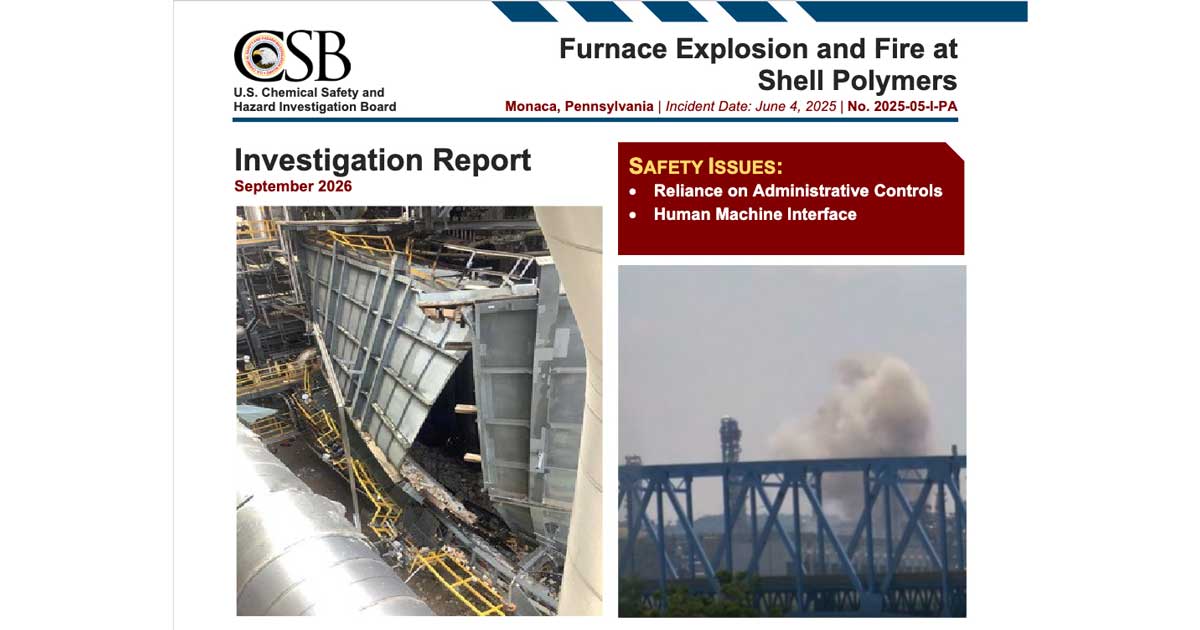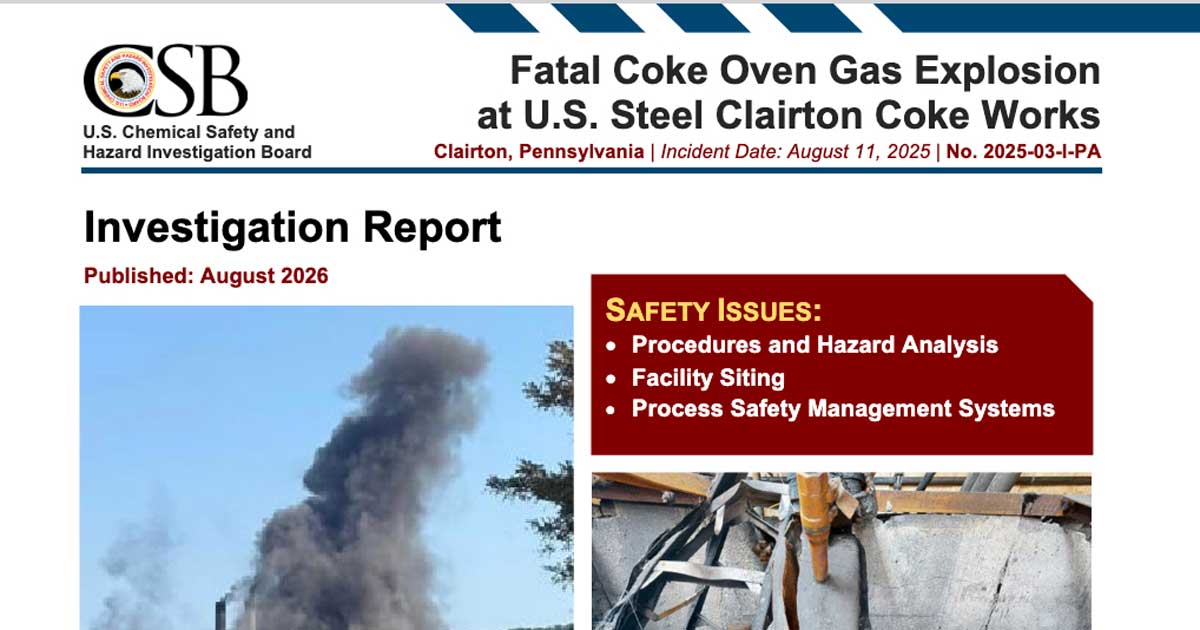
The U.S. Chemical Safety and Hazard Investigation Board sent a team to investigate the fatal explosions and fires at U.S. Steel’s Clairton Coke Works plant in Clairton, Pa., that occurred August 11. Two were killed, and at least 10 others were injured and sent to area hospitals for medical treatment.
CSB Chairperson Steve Owens said, “The CSB will work to determine the cause of this tragic incident and identify actions that can be taken to help ensure that a similar disaster like this does not happen again.”
The Clairton Coke Works facility processes raw coal into coke, which is then used as a primary component in steelmaking. The 392-acre facility is located about 15 miles south of Pittsburgh and is considered the largest coking facility in North America. Nearly 1,300 employees report to the facility daily.
Also Read: Final Report on 2018 Refinery Explosion and Hazmat Incident
According to WGAL, the explosion occurred in at least two coke oven batteries. Emergency crews were called to the scene just before 11 a.m. and worked to rescue those trapped under the rubble.
The Allegheny Front reported that the site has a history of safety issues.
The paper says Jim Kelly, former deputy director of environmental health at the Allegheny County Health Department, gave a post-fire deposition in 2020. In it he said that he toured the facility in 2017 and found it “one of the most decrepit facilities I’ve ever seen in my nearly 30 years of work.” Kelly said the facility had “lots of rust and unused equipment, and just generally … poor conditions of a lot of the equipment there.”
More recently, an explosion at the plant in February sent two workers to the hospital, and a malfunction in June knocked out the plant’s pollution controls, the paper reported.
CSB Board Member Sylvia Johnson said, “This is a very serious incident that fatally injured two people and put others at serious risk. It should not have happened and potentially could have been prevented.”
The CSB is an independent federal agency charged with investigating incidents and hazards that result, or may result, in the catastrophic release of extremely hazardous substances. The agency’s core mission activities include conducting incident investigations; formulating preventive or mitigative recommendations based on investigation findings and advocating for their implementation; issuing reports containing the findings, conclusions, and recommendations arising from incident investigations; and conducting studies on chemical hazards.
Original post – Copyright © 2025 HazmatNation.com. Externally linked references may hold their own independent copyright not assumed by HazmatNation