The U.S. Environmental Protection Agency deleted the Kerr-McGee Kress Creek Superfund site in Illinois from the National Priorities List. The deletion means no further cleanup is required to protect human health and the environment at the 6.7-mile site in DuPage County.
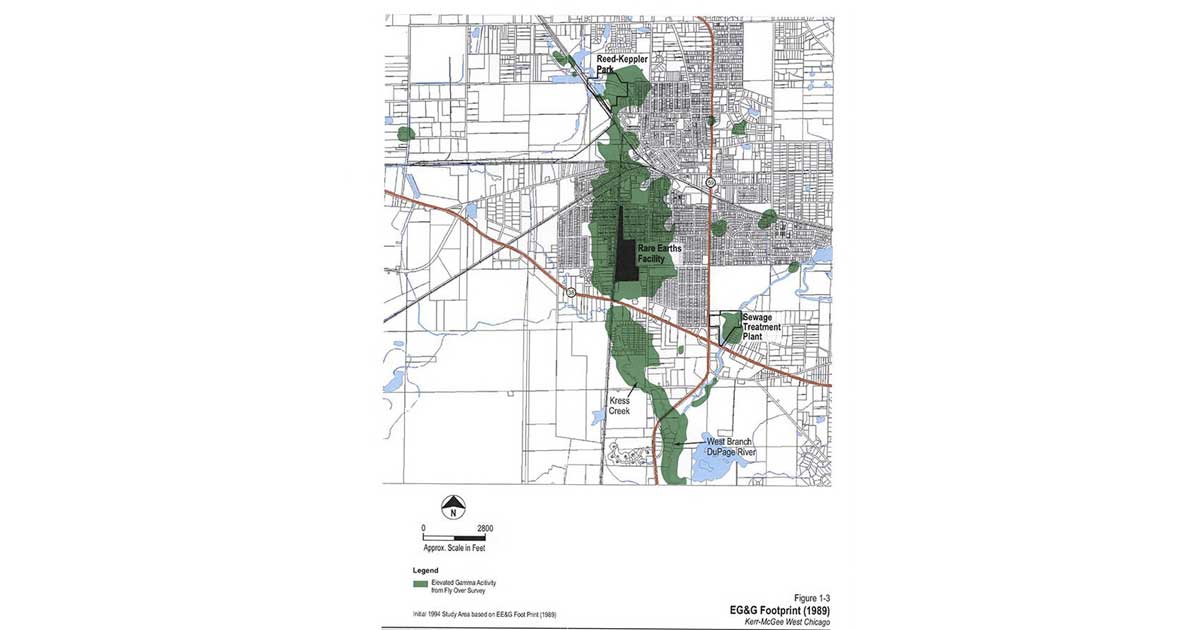
Contamination at the site originated from the former Rare Earths Facility. The facility was operated by Lindsay Light and Chemical Company and produced non-radioactive elements known as rare earths and radioactive elements such as thorium, radium and uranium along with gas lantern mantles for private entities and federal atomic energy programs.
Also Read: EPA Oversees Uranium Cleanup in Ariz.
Radioactive surface runoff discharged from the facility into Kress Creek, and materials containing thorium residuals spread in the sediment, on the banks, and in some floodplain areas of the creek and the west branch of the DuPage River.
Cleanup began in 2005. Crews divided the site into several sections, working upstream to downstream. In each section, crews removed contaminated material before restoring areas with clean backfill and vegetation.
Also Read: Major Radiation Near-Miss Inspires Hazmat Training
The contaminated material was transported offsite for safe disposal. Cleanup was completed in 2014, with restoration continuing until 2025.
EPA listed four sites on the National Priorities List to address radioactive waste contamination from the Rare Earths Facility. Kress Creek is the third to be deleted, with the Reed-Keppler Park site deleted in 2010, and the Sewage Treatment Plant site deleted in 2013.
The Residential Areas site has been cleaned up but remains on the NPL until the former Rare Earths Facility is addressed under the oversight of the Illinois Emergency Management Agency.
After years of steady progress by EPA, responsible parties, and state and local partners, deleting a Superfund site from the NPL is the final cleanup milestone in the cleanup process. While EPA encourages site reuse throughout the process, deleting a site from the NPL can revitalize communities, raise property values, and promote economic growth.
Original post – Copyright © 2026 HazmatNation.com. Externally linked references may hold their own independent copyright not assumed by HazmatNation